Industriaimport
BIOMASS AND PELLETS

Lines for producing pellets from wood and other biomass

Pellet quality is not made in the press, it is made before it, in the preparation of the raw material. Amandus Kahl supplies complete plants for pelleting wood, straw and other biomass: from intake and size reduction, through drying and conditioning, to pelleting, cooling and packing.

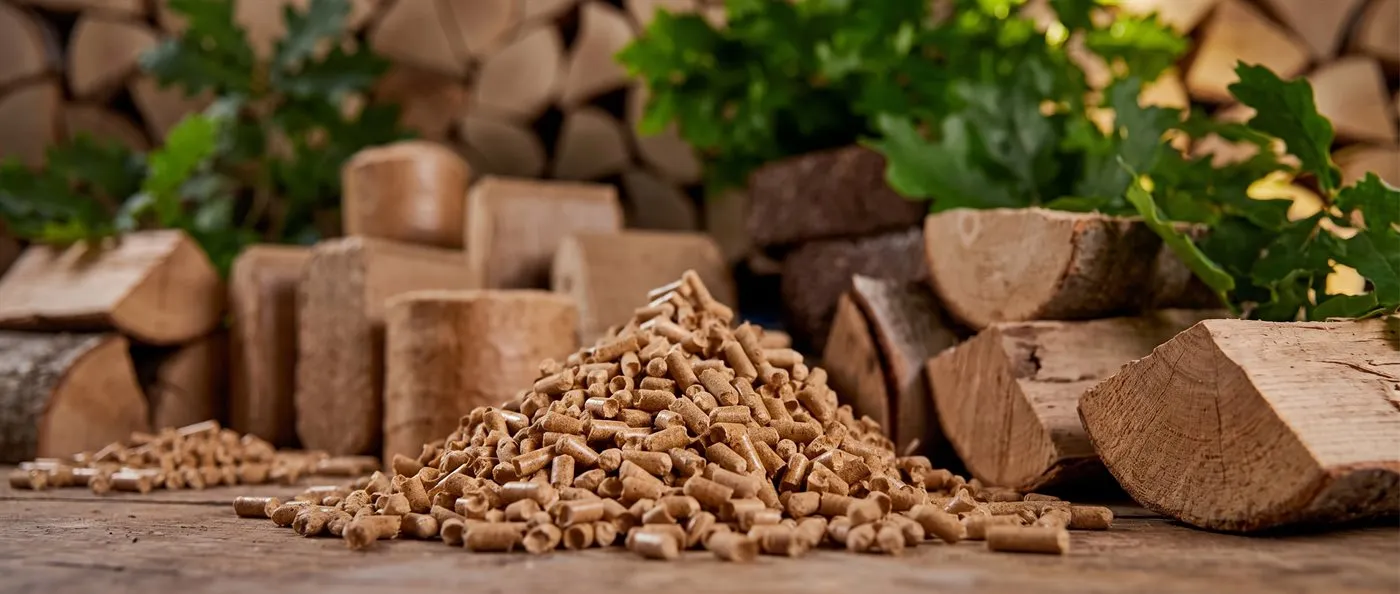
Wood pellets and logs — raw material and finished product of a pelleting line
PROCESS

From raw material to packed pellets

The sequence depends on the incoming raw material. Dry sawdust calls for a shorter line, wet shavings and logs for a considerably longer one.

  1. 1

    Intake and preparation

    With logs: debarking and wet chipping. With straw bales: breaking the bale, which is at the same time the hardest part of the job, because bales differ in shape and in chop length.

  2. 2

    Wet grinding

    A hammer mill or roller mill reduces the material to a uniform particle size. Without that the press runs unevenly and the die wears unevenly.

  3. 3

    Drying

    Belt dryers bring the moisture down to the working range. A dryer with a woven belt is used for drying.

  4. 4

    Conditioning

    Steam and water prepare the material for the press. With straw it is precisely this step, and not pelleting, that is the main challenge of the whole plant.

  5. 5

    Pelleting

    A flat die press. The material is led by gravity between the rollers and the die, compacted through the holes and cut by knives to the required length.

  6. 6

    Cooling, screening, dispatch

    The cooler stabilises the pellet, screening separates the fines, and then come the silo, packing and loading.

EQUIPMENT

What we supply for this branch

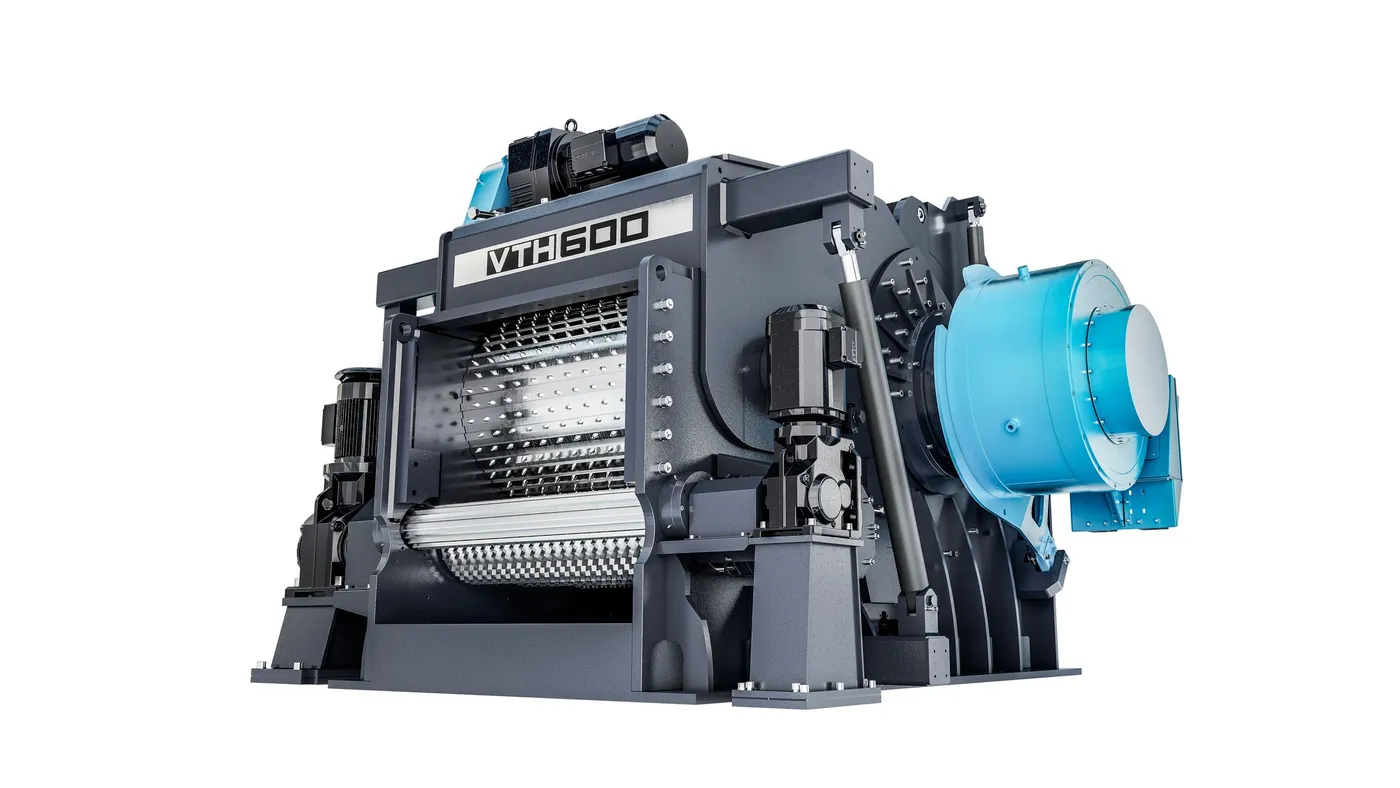
Vecoplan VTH 600 drum chipper for wood, knife rotor and drive unit

Shredders and chippers

Logs, branches and coarse wood waste are reduced before drying. Vecoplan builds drum chippers and single- or twin-shaft shredders, with hydraulic drive and foreign object protection. The output is a uniform mass ready for further processing.

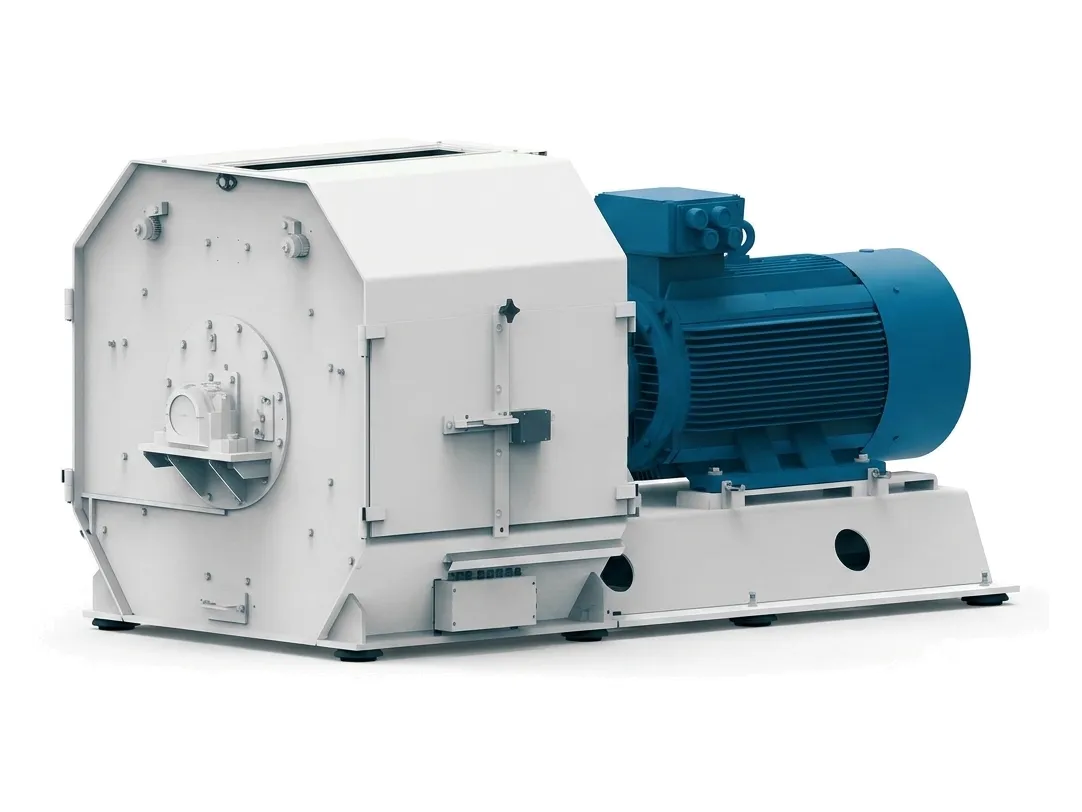
Kahl hammer mill with drive motor on a common frame

Hammer mill

Grinding comes after the shredder. The hammer mill reduces chips and shavings to a uniform particle size, without which the press runs unevenly and the die wears unevenly. The output size is determined by the size of the screen apertures.

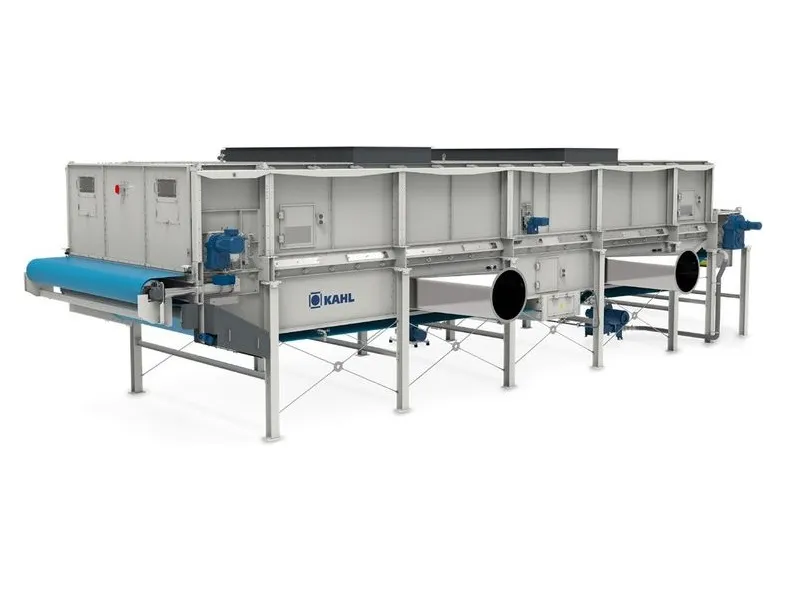
Kahl belt-type channel dryer with conveyor belt

Belt dryers

The dryer brings the raw material moisture down to the working range of the press. A modular design means that units are joined together and extended later as capacity grows. For pelleting, the version with a woven belt is used.

Kahl flat die pellet mill in a biomass plant

Flat die pellet mills

The material is led by gravity between the rollers and the die, compacted through the holes and cut by knives to the required length. Kahl builds flat die presses in 16 sizes, with long-lasting tooling and a long interval between two re-sharpenings.

Alongside the above we also supply all conveying equipment, silos, bins, cyclones, filters, vibrating screens, electrical equipment and more.

TECHNOLOGY

Why wood is pelleted with a flat die

Materials of low bulk density, below 0.3 t/m³, such as wood, grass, straw, dried beet pulp and municipal waste, are pelleted predominantly with a flat die. The reason lies in the physics: the large area in the pelleting zone allows every roller to pellet immediately, and power transmission is high. Material with a density of 0.10 t/m³ needs to be compacted four to five times over to obtain a pellet of 0.65 t/m³.

A low roller speed of 2.5 m/s ensures good de-aeration and product quality. A further consequence is noise below 70 dBA, which in a plant running three shifts is no small thing.

The gap between the rollers and the die is adjusted during operation, by the hydraulic head carrying the rollers. This controls pellet quality without stopping the line. Permanently lubricated bearings with special sealing reduce friction and extend service life.

Changing the die and rollers takes 30–45 minutes, which directly raises the utilisation rate of the plant.

TECHNICAL PARAMETERS

Numbers instead of promises

Kahl builds presses in 16 sizes. The final choice depends on the raw material, its moisture and the required annual output.

Parameter Value Note
Capacity per press300–12,000 kg/hMost models work in the 1.5–12 t/h range
Drive motor3–630 kW16 press sizes
Pellet diameter6–8 mm (wood)The press programme covers 0.4–40 mm
Pellet lengthup to 30 mmSet with knives
Moisture of finished pellets8–10 %Hence the high energy value
Moisture of incoming straw14–16 %Ideal range for stalky biomass
Roller speed2.5 m/sNoise below 70 dBA
Die Ø175–1,500 mmRollers Ø130–450 mm
Die change30–45 minWithout special tools
RAW MATERIALS

The difference is in the preparation, not in the press

There are practically no limits; only the length of the preparation before the press differs.

For testing a new raw material Kahl has its own pilot plant, so before investing you can check whether and how your material pellets.

Planning a pellet plant?

Send us the type of raw material, its moisture and the required annual output, and we will come back with a proposed line within 24 hours.

REQUEST A QUOTE